At a Glance
Through its partnership with Qualivis, an MSP powered by LotusOne, this health system fundamentally changed how it manages contingent labor. Over two years, it:
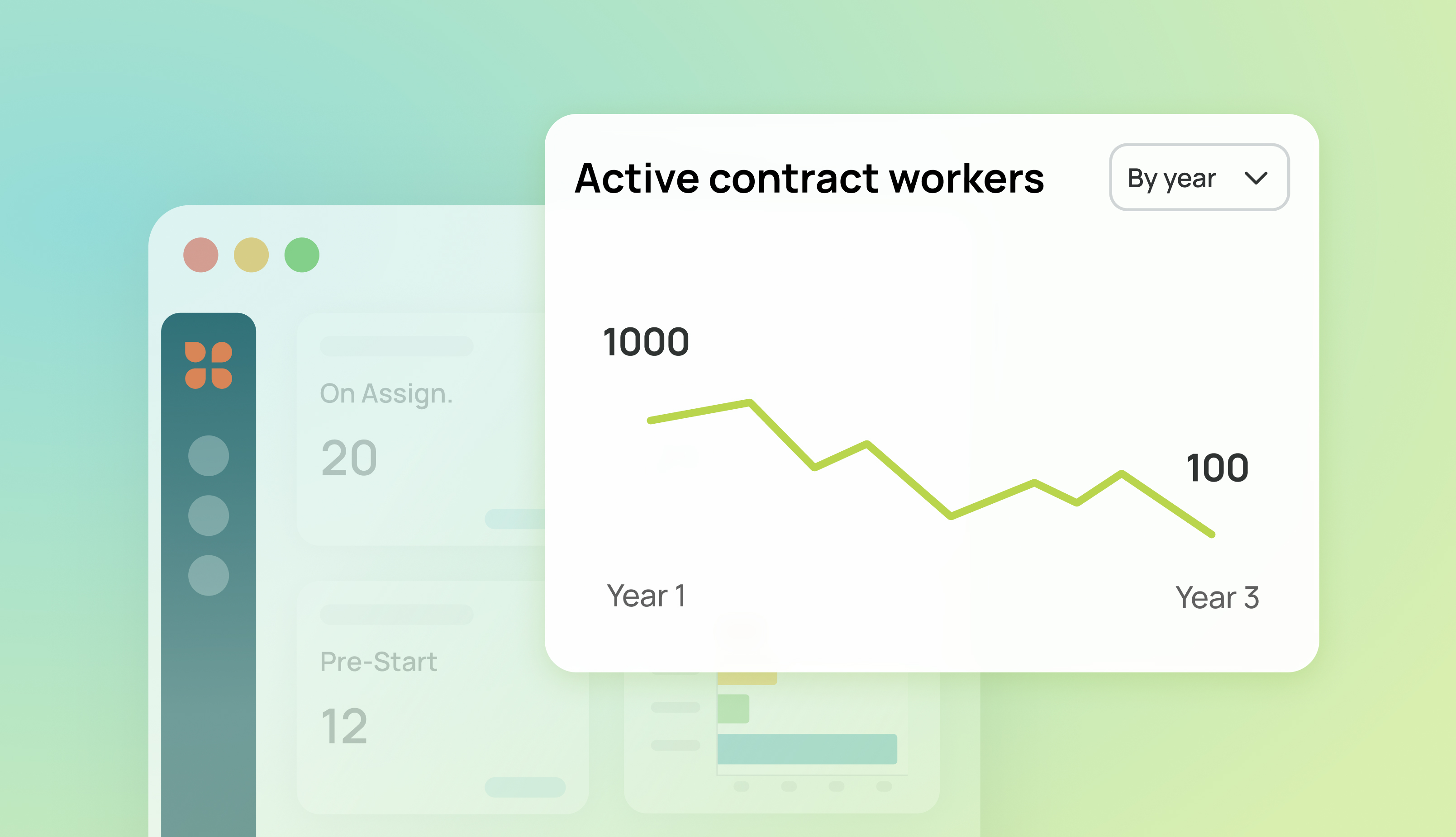
- Reduced contingent labor headcount from ~1,000 to fewer than 100
- Sustained lower headcount levels for more than two years
- Delivered more work hours at approximately $2 million less in spend over a five-month period
- Reclaimed 600 to 800 administrative hours annually through onboarding automation
The Challenge
A large, multi-hospital health system was managing a large and complex contingent workforce, with processes that varied by location and relied heavily on manual effort. At one point, the organization was overseeing approximately 1,000 travelers, yet leaders lacked real-time visibility into total headcount, spend, compliance status and workforce productivity.
Critical information often surfaced only after invoices were submitted — sometimes months later — limiting the organization’s ability to forecast costs, manage risk or make proactive workforce decisions. Job requests and approvals relied on email, compliance documentation came from multiple agencies and onboarding contract workers required significant manual coordination. In many cases, onboarding a single contractor took two to three hours of administrative time, with frequent breakdowns along the way.
As demand fluctuated, leaders needed a way to scale more quickly while maintaining financial sustainability and operational control.
The Solution
“LotusOne helps us make proactive decisions instead of reactive ones.” — Nimeet K., Director of Workforce Management and Programs
The organization partnered with Qualivis and implemented LotusOne as a centralized platform to support a more transparent, data-informed approach to contingent workforce management. While strong governance and partnership were critical, technology played a vital role in making those efforts scalable, repeatable and sustainable.
LotusOne became the system through which contract roles were requested, approved, onboarded, credentialed and tracked. Real-time dashboards and BI reporting gave leaders visibility into headcount, spend, hours worked and pipeline activity, enabling decisions to be guided by current data rather than historical invoices. Automated approval workflows brought unit leaders, service line leadership and finance into a single, auditable process.
Integrations with Workday and scheduling systems reduced manual data entry and supported faster, more reliable day-one access for clinicians. Centralized compliance tracking replaced email-based document management, giving HR and compliance teams clear visibility into credential status and upcoming expirations.
Just as importantly, LotusOne enabled shared, real-time data between the organization and Qualivis. With both teams working from the same source of truth, discussions moved quickly beyond information gathering and focused on strategy, forecasting and continuous improvement.
The Results
“Before, we didn’t know how many contract workers we had until invoices came out months later. Now, I can tell you today how many contract workers we have.” – Nimeet K.
After going live with LotusOne, leaders gained real-time visibility into spend, hours worked and headcount across the system. Workforce decisions were no longer based on delayed invoices, but on current data.
After reaching peak pandemic levels, average monthly contract worker headcount declined from roughly 1,000 to fewer than 100. That lower level has been sustained for more than two years. This reduction occurred through more disciplined workforce planning, supported by tighter approvals and clearer data.
At the same time, the organization reduced spend while maintaining output. For example, over the course of five months, it maintained roughly the same number of contract workers while delivering more hours worked at approximately $2 million less in spend. Market rate changes contributed, but leaders also made deliberate decisions to better utilize the talent in place instead of adding headcount.
Operational efficiency improved alongside these financial changes. In one year alone, the organization onboarded 300 to 400 contract workers. Previously, each onboarding required two to three hours of administrative time. By automating onboarding and compliance workflows through LotusOne, the organization reclaimed an estimated 600 to 800 administrative hours in a single year.
Together, these results over a multi-year period show a more controlled and sustainable approach to managing contingent labor, supported by real-time visibility rather than delayed reporting.
Why It Worked
This success was driven by a highly engaged partnership supported by purpose-built technology. LotusOne provided the shared visibility, automation and integrations needed to support disciplined decision-making at scale, while the relationship with Qualivis ensured the data was actively used to guide action.
By creating a single source of truth for contingent labor, the organization and Qualivis were able to move from reactive problem-solving to proactive, data-informed workforce strategy — establishing a foundation for continued optimization and expansion in the years ahead.